Start with Play
Screen-free coding and simple discovery for curious beginners.
3M+
Users
25,000+
Schools
80+
Countries
2017
Innovation Began
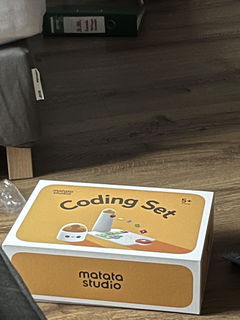
Screen-free coding and simple discovery for curious beginners.
Build logic, test ideas, and learn through hands-on play.
Build bigger projects with visual coding and explore the world in greater detail.
Advanced tools for deeper coding, building, and experimentation.
Sarah J.
My 5-year-old needed a little help understanding the cards at first, but after a few tries he was able to create routes on his own. He now brings it out several times a week, which is more than I can say for most of his toys.
verified buyer
Melissa R.
I bought this because I wanted something educational that did not involve another app. My daughter enjoys testing different commands and figuring out why the robot did not go where she expected. Setup was simple and she started playing with it the same day.
verified buyer
Daniel K.
The instructions were clear and my son was able to get started without much help. What surprised me most was how long he stayed focused while planning and correcting the robot’s path. It feels like play, but he is clearly practicing problem-solving.
verified buyer
Mike T.
Setup was simple and my daughter was coding her first story within minutes. Highly recommend for parents who want meaningful play.
verified buyer
Ksenia I.
We used MatataStudio in our primary coding workshops with small groups of students. The robot activities kept learners engaged while introducing programming concepts through hands-on challenges, creativity, and problem solving.
verified educator
Duncan M.
Students quickly learned how to control the robot and enjoyed creating their own challenges, artwork, and music. Even beginners became confident using coding concepts through play and experimentation.
verified educator
Huygen F.
MatataStudio provides a great way to introduce coding without computers. The flexible activities support teamwork, logical thinking, creativity, and problem solving while keeping students excited to learn.
verified educator
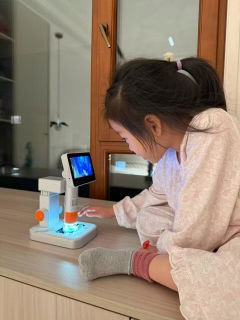
A family walk in New Zealand became a hands-on science adventure as a young explorer used the digital microscope to uncover hidden details in plants and natural textures.
Case Study
During a walk in the New Zealand outdoors, a young explorer brought the digital microscope along to investigate the natural world more closely. Surrounded by trees, grasses, and forest textures, the child stopped to examine leaves, bark, pine needles, and other small details that would normally go unnoticed.
Instead of simply walking past nature, the microscope encouraged closer observation and more purposeful exploration. A patch of grass, a tree trunk, or a cluster of leaves could quickly become the starting point for questions, comparisons, and new discoveries.
The activity shows how the digital microscope can turn an ordinary family outing into a portable science experience—encouraging curiosity, observation, independent thinking, and a stronger connection with the natural environment.
A handmade winter stage became an interactive holiday scene as children programmed their robot to move and dance through the snow.
Case Study
Children created a festive stage with handmade reindeer decorations, snowy scenery, and seasonal details. After building the setting, they programmed the coding robot to move and dance inside their Christmas display.
The project combined coding with arts and crafts, allowing children to see how a sequence of commands could bring their own creation to life. They could experiment with different movements, adjust the programme, and redesign the stage to create a unique holiday performance.
It is a playful example of how coding can become part of a larger creative project—encouraging planning, imagination, hands-on making, and problem-solving at home.
Children customised their robot with playful arms, programmed it to knock down a cup tower, and turned the challenge into a movement-filled game.
Case Study
Children gave their robot extra personality by adding a pair of playful arms, then set up a simple cup tower challenge at home. After building the pyramid, they programmed the robot to follow a path and knock it down, turning coding into an exciting hands-on game.
The activity did not stop at the challenge. After testing different routes and movements, the robot also became part of a playful dance moment, encouraging children to move, laugh, and interact with it in a more imaginative way.
By combining simple customisation, route planning, and active play, the activity helps children explore sequencing, cause and effect, problem-solving, and creativity—while keeping learning fun and physical.
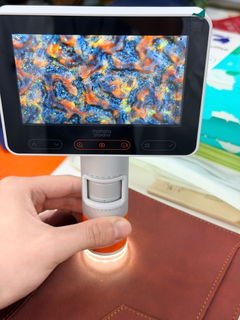
Students explored nature outdoors, examined cells and crystals in class, and turned their microscope images into digital lab reports.
Case Study
Students began by taking the digital microscopes on a field trip, where they worked in small groups to examine plants and marine life. They were surprised to discover that barnacles were living organisms rather than simply shells.
Back in the classroom, students compared onion and leaf cells, explored photosynthesis, and investigated the different structures of salt and sugar crystals. They captured their own microscope photos and videos, then used the results to create digital lab reports and present their discoveries.
The experience strengthened scientific reasoning, observation, teamwork, and digital skills. Instead of simply reading about science, students collected evidence, documented findings, and shared conclusions like young researchers.
Students explored music, geometry, and time through hands-on coding activities that encouraged creativity, problem-solving, and teamwork.
Case Study
Students began by programming robots to greet animals, play music, and repeat movements. Once they understood the basic commands, they were encouraged to experiment and create their own programs.
Using the Artist Add-on, they coded the robots to draw geometric shapes and worked in groups to create original artwork. The robots were also used in a mathematics activity, where students programmed them to move towards the correct clock time. The activities developed coding logic, directional thinking, creativity, problem-solving, patience, and cooperation.
According to the teacher, students understood the robots quickly and were highly enthusiastic about coding. “We experienced cooperation, happy faces, the joy of learning, and excitement when students found the solution.”
Preschoolers explored routes, spatial concepts, simple maths, and storytelling while learning to plan, cooperate, and create independently.
Case Study
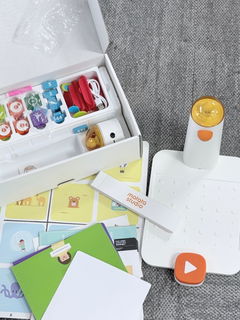
Tale-Bot Pro was used in both group and individual activities across different areas of the curriculum. Although the children were initially unsure about how the robot worked, they quickly became confident and began suggesting their own routes, stories, and challenges.
Through hands-on activities, they practised sequencing, left and right directions, spatial orientation, simple planning, addition and subtraction, and early algorithmic thinking. Storytelling and group play also encouraged children to communicate, divide roles, help one another, and solve problems together.
Recording, dancing, drawing, repeating commands, and storytelling were among the children’s favourite features.
According to their teacher, the students became highly engaged and began looking forward to using the robot in every lesson.
“For the children, it was an exciting game filled with joy, creativity, and discovery.”
A leaf, a piece of fabric or even a notebook page can look completely different once you get close enough. Here are some simple ways children can use a digital...
Direct Answer: Yes, coding is absolutely worth learning in 2026, but the focus has shifted from memorizing syntax to mastering "computational thinking." While AI can now write the lines of...
Unlock Your Child's Potential: Why Screenfree Coding is the Future of Early STEM Education Screenless coding courses for preschool children offer a powerful practical approach to fostering critical thinking, problem-solving,...
ürün mükemmel bir şey, çalıştığım anaokulu için sipariş etmiştim ve çocukların en çok oynamak istedikleri şey oldu. Oyunla beraber programlama yapmamız çocukları çok heyecanlandırıyor. 10/10
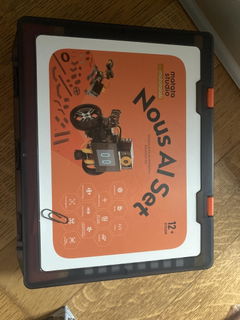
This set has everything that is needed for learning about IoT, AI, neural pathways and more. You just need to add a digital device. I like it because it’s a complete set of things. Even screwdrivers and other tools are included.
Its very interesting that increase the invention
Lo compré para mi hija, para utilizarlo en la defensa de su programación, ha resultado todo un éxito. Lo recomiendo 100%. Extraordinario.
I recently purchased a microscope for my 9-year-old daughter, and I couldn’t be more pleased with our experience. After trying four different microscopes in the past, all of which left her frustrated because she couldn’t properly observe or explore anything, this one has been a complete game changer.
From the moment we set it up, everything worked flawlessly. The image quality is excellent, and it’s easy enough for a child to use independently while still offering real opportunities for discovery and learning. For the first time, my daughter is truly able to observe, experiment, and enjoy the process of exploring the microscopic world. She is absolutely thrilled with it.
We are incredibly happy to have discovered MatataStudio. Not only is the product fantastic, but their customer service also deserves special mention. They are exceptionally friendly, responsive, and accommodating, which made the whole experience even better.
As a small suggestion, it would be wonderful if there were a beginner-friendly children’s book included (or recommended) to guide kids through their first steps. This is absolutely not a requirement, but it could make it even easier and more engaging for children to get started at home.
Overall, we are very impressed and would highly recommend this microscope to other families looking to inspire curiosity and hands-on learning in their children.